

Waste clearance Newington Butts Elephant And Castle
Posted on 07/08/2026
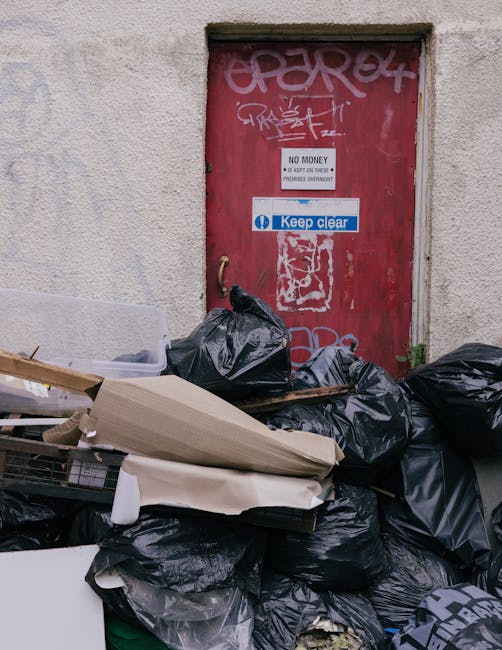
Waste clearance Newington Butts Elephant And Castle: a practical guide for homes, flats, shops and busy local projects
If you are looking into Waste clearance Newington Butts Elephant And Castle, you are probably dealing with one of those jobs that looks manageable for five minutes and then suddenly becomes a full-on weekend. A loft full of old boxes, a flat that needs clearing before a move, post-renovation rubble, or a shop back room that has turned into a storage cave. Sound familiar?
The good news is that local waste clearance does not need to be stressful. Done properly, it saves time, keeps your property safer and tidier, and helps you avoid the mess of figuring out what goes where. This guide walks through how waste clearance works in the Newington Butts and Elephant and Castle area, who it suits, what to watch out for, and how to get a clean result without the faff.
Along the way, we will also point you toward useful related reading, such as whether Elephant and Castle is a good place to call home, a property buying guide for Elephant Castle, and tips for selling property in Elephant and Castle when clearance matters before a sale.
Why Waste clearance Newington Butts Elephant And Castle Matters
Newington Butts sits right in the thick of a busy part of south London, and that matters more than people think. In an area with flats, mixed-use buildings, commercial premises, and a steady flow of refurbishments and moves, waste builds up quickly. One skipped clearance can turn into blocked walkways, spoiled storage space, complaints from neighbours, or a project that drags on far longer than it should.
That is especially true in Elephant and Castle, where space is usually at a premium. A few bulky items can make a room feel unusable. A pile of builders' sacks in a hallway can make day-to-day life awkward. And if you are dealing with a business, clutter can chip away at your presentation before customers even step inside. Let's face it, people notice the mess before they notice the nice new paintwork.
Waste clearance also matters because different waste streams need different handling. General rubbish, furniture, garden cuttings, office surplus, and builders' waste should not all be treated the same way. The practical goal is simple: remove it safely, sort it sensibly, and keep the site or property usable.
For local residents, it can be the difference between a home that feels cramped and one that breathes again. For landlords and agents, it can mean a property that is ready to market. For businesses, it can be the difference between a tidy reset and a half-finished scramble before opening time.
Expert summary: In a dense part of south London, waste clearance is not just about getting rid of things. It is about restoring space, reducing friction, and keeping homes and premises ready for whatever comes next.
How Waste clearance Newington Butts Elephant And Castle Works
The process is usually more straightforward than people expect. A good waste clearance service follows a clear sequence, even if the job itself looks chaotic at the start. In practical terms, it tends to work like this:
- Identify what needs removing. This might include mixed household rubbish, unwanted furniture, old flooring, office equipment, garden waste, or builders' debris.
- Assess access and volume. A top-floor flat with no lift is not the same as a ground-floor shop clearance. Stairs, parking, loading points and timing all affect the job.
- Confirm the right service. Some jobs are simple rubbish collection. Others need a fuller house clearance, loft clearance, office clearance, or specialist builders' waste disposal.
- Agree the scope and price. Good pricing should be transparent enough that you know what is included before anyone starts lifting.
- Remove, sort and load. The team should separate reusable, recyclable and disposable materials where possible.
- Leave the area tidy. A proper clearance is not complete if the place is left dusty, strewn with offcuts, or still partially blocked.
In the local context, timing can be a real factor. Busy roads, estate access, limited parking and small communal areas can all affect how quickly a clearance can happen. A seemingly minor detail, like whether the team can park close enough to load efficiently, can make a big difference.
If you need a broader overview of available help, the services overview is a useful place to understand the different clearance types that often overlap in this part of London.
And if the job is mostly disposal of bulky items, you may also find furniture disposal in Elephant and Castle helpful, because sofas, wardrobes and beds are a very common part of local clearance work. Very common.
Key Benefits and Practical Advantages
There are obvious benefits to hiring help with waste clearance, but the less obvious ones are often the most valuable.
- Time saved: what would take you several trips can often be handled in one visit.
- Less physical strain: lifting old furniture, broken appliances or heavy bags is no small thing.
- Better organisation: a structured clearance helps you see what is worth keeping, donating, recycling or disposing of.
- Cleaner handovers: useful for tenants, landlords, agents and sellers preparing a property.
- Safer spaces: fewer trip hazards, fewer blocked exits and less clutter in shared areas.
- Reduced stress: maybe the biggest one, frankly. A clear room does wonders for the head.
There is also a cost-efficiency angle. People sometimes assume doing it themselves will automatically be cheaper. Sometimes it is, sometimes it is not. Once you account for van hire, fuel, parking issues, time off work, loading effort, and multiple disposal trips, the maths becomes less tidy.
For businesses, the practical win is often reputation. A backroom, office or retail stock area can get out of hand fast. If customers or staff need to move around it, or if the clutter starts affecting your operations, clearance becomes an operational issue rather than just a tidy-up job.
And for property owners, it can support those in-between moments that matter: before a sale, after tenants move out, after builders leave, or when a relative's home needs clearing in a calm, respectful way. If you are in that position, you might also find the local perspective in this Elephant and Castle area piece useful for understanding how local spaces are used and valued.
Who This Is For and When It Makes Sense
This kind of clearance is not just for one type of customer. In practice, it serves a fairly wide mix of people, and that is part of why it is so relevant around Newington Butts and Elephant and Castle.
Homeowners and tenants
If you are moving out, moving in, or simply trying to reclaim a room that has become a storage zone, waste clearance is often the quickest route back to sanity. A spare room full of broken chairs and old curtains does not have to stay that way.
Landlords and letting agents
End-of-tenancy clearances, abandoned items, and pre-lets are all common. You want a property ready for viewings, not one that still smells faintly of old carpet and dust. To be fair, that smell has a way of lingering.
Business owners
Shops, offices, cafes and small commercial units often need clearance after a refit, stock change, closure, or seasonal reset. If you are trying to keep a customer-facing space presentable, you need waste removed quickly and without disrupting trading.
Builders and property professionals
Refurbishment work creates its own mess. Offcuts, packaging, broken materials and mixed debris need moving in a way that keeps the site safe and workable. For that, specialist builders' waste disposal in Elephant and Castle is often the better fit.
People dealing with one-off or sensitive clearances
That might include bereavement clearances, downsizing, or sorting a long-neglected loft. These jobs usually need a bit more patience and a less hurried approach. You want practical help, yes, but also care.
If you are unsure whether your situation fits, a quick sanity check helps: is the waste bulky, mixed, difficult to move, or too much for a couple of household trips? If yes, a clearance service probably makes sense.
Step-by-Step Guidance
Here is the simplest way to approach waste clearance without turning it into an all-day headache.
- Make a rough inventory. Walk through the space and group items into categories: keep, donate, recycle, dispose. You do not need to be perfect, just honest.
- Separate anything hazardous or restricted. Paint, chemicals, sharp items and certain electricals need extra care. If something feels questionable, treat it cautiously.
- Measure the big items. Sofas, wardrobes and mattresses are the usual troublemakers. A tape measure is useful here. Very useful, actually.
- Check access. Note stairs, gates, narrow hallways, lifts, parking constraints and loading limits. In Elephant and Castle, access can be the make-or-break factor.
- Choose the right service type. A house clearance is not the same as office clearance, and garden waste is not the same as renovation waste.
- Book a sensible time slot. If you can, avoid peak household or business hours when access is tight.
- Keep essential items aside. It sounds obvious, but passports, chargers, keys, documents and medications sometimes get buried in the rush.
- Ask about sorting and recycling. A responsible clearance should aim to keep reusable or recyclable material out of general waste where possible.
- Do a final walk-through. Check cupboards, loft corners, under beds and the back of storage areas. The last thing you want is discovering one forgotten box three days later.
If you are clearing a residential property, a dedicated house clearance service may be the cleanest route. For upper-level storage spaces, loft clearance is often the more precise fit.
And if you are mostly dealing with a few large items rather than a whole property, a smaller-scale rubbish collection in Elephant and Castle can be enough.
Expert Tips for Better Results
A few practical habits can make a clearance smoother and cheaper. Not glamorous, but they work.
- Take photos before booking. Good images help estimate volume and access more accurately.
- Put similar items together. It speeds up loading and makes sorting less chaotic.
- Label keepers clearly. If you are clearing shared rooms or a family property, labels prevent accidental mistakes.
- Plan for awkward items first. Big wardrobes, mattress bases and broken cabinets often create the most friction.
- Be realistic about time. A packed flat rarely clears itself in ten minutes, however much we all wish otherwise.
- Ask what happens to reusable items. Even if you are not trying to donate them yourself, it is good to know the service approach.
One small but important tip: if your clearance is tied to a moving day, sale completion or tenancy deadline, build in a buffer. Things always take longer than the most optimistic version of the plan. Always.
If the clearance is around a shop or trading unit, timing matters even more. You may want to look at cheap waste removal for shops near Elephant and Castle Shopping Centre for the kind of planning that helps retail sites stay operational.

Common Mistakes to Avoid
Waste clearance goes wrong in fairly predictable ways. Here are the big ones.
- Leaving everything to the last minute. That is how you end up sorting bins at 9 p.m. with a takeaway on the counter.
- Underestimating volume. A pile of "a few bits" can become a van-load very quickly.
- Ignoring access issues. Stair-only properties and narrow entrances need more planning than ground-floor spaces.
- Mixing items that need different handling. Builders' waste, white goods and general junk should not all be treated the same.
- Forgetting shared areas. In flats, corridors and communal entrances can become bottlenecks if items are staged badly.
- Choosing only on price. Cheap is fine if it is clear and reliable. Cheap with surprises is another story.
One of the most common mistakes, honestly, is assuming all waste is the same. It is not. A bag of household clutter, a pile of broken shelving, and a garden clearance all have different practical demands. That is why matching the job to the right service matters.
If you are dealing with a building project specifically, the dedicated rubbish clearance on Walworth Road article and same-day rubbish removal near Elephant and Castle Station can be useful local reads for timing and turnaround expectations.
Tools, Resources and Recommendations
You do not need a mountain of equipment to prepare for a clearance, but a few simple tools help a great deal.
- Tape measure: for bulky items and access points.
- Marker pen and labels: for separating keep, donate and dispose piles.
- Gloves and sturdy footwear: especially if you are moving items yourself before the team arrives.
- Phone camera: useful for documenting items and showing access conditions.
- Heavy-duty bags or boxes: for smaller loose items that would otherwise scatter everywhere.
For service selection, it helps to think in terms of the job rather than the keyword. Do you need one-off clearance, ongoing collection, or a specialist service? If you are still comparing your options, the pricing and quotes page is a sensible next stop for understanding how requests are usually structured.
You can also look at recycling and sustainability if you want to know how responsible disposal is approached across different waste types. That is especially helpful if you are trying to make a cleaner, lower-waste decision rather than simply emptying a room as fast as possible.
For customers who prefer to understand the company a little better before booking, about us gives a useful sense of how the service is presented, while insurance and safety is worth a read when you want reassurance on handling, lifting and site care.
Law, Compliance, Standards and Best Practice
Waste clearance in the UK is not something you want done casually. You do not need to become a legal expert overnight, but a few basic expectations are worth knowing.
First, waste should be handled responsibly and taken to an appropriate disposal or recovery route. If a clearance is being done by a third party, you want confidence that the waste will not just disappear into the nearest bad practice. That includes proper handling of mixed loads, electrical items and anything requiring special care.
Second, safety matters. Manual handling, access management and protecting shared spaces are all part of a competent clearance. In flats or commercial premises, that means being careful with communal entrances, stairs, floors and walls. A scratched banister is not the end of the world, but it is also not what anyone wants.
Third, you should be clear about what is included before work begins. Good practice means a clear scope, clear pricing expectations, and a sensible understanding of what happens if the volume changes on arrival. If a service is vague, keep asking questions. Polite questions, of course, but questions nonetheless.
It is also wise to keep your own records for anything tied to tenancy changes, sales, works or handovers. A few photographs and notes can save arguments later. Not exciting, no, but useful.
If you are dealing with post-build debris, the specific builders waste disposal guidance is especially relevant because construction waste tends to bring extra handling and safety considerations.
Options, Methods and Comparison Table
There are several ways to clear waste, and the best one depends on what you are dealing with. Here is a simple comparison.
| Option | Best for | Pros | Limitations |
|---|---|---|---|
| DIY clearance | Small, light loads | Can be cheaper upfront; full control | Time-consuming; multiple trips; lifting risk; parking hassle |
| Skip-style approach | Ongoing works or larger volumes | Good for long jobs; useful on-site | Needs space and planning; not ideal in every location |
| One-off rubbish collection | A few bulky items or mixed bags | Quick and simple; less effort | Not always enough for very large clearances |
| House or flat clearance | Whole-property jobs | Best for complete resets; efficient for cluttered homes | Needs clear access and better planning |
| Office or shop clearance | Commercial premises | Reduces downtime; suited to trading spaces | Often needs timing around business hours |
For most local readers, the decision usually comes down to this: do you need to clear a few items, or do you need the space properly reset? If it is the latter, a structured clearance service saves a lot of bother.
Commercial customers may want to compare with office clearance in Elephant and Castle, while households can often benefit more from house clearance or loft clearance.
Case Study or Real-World Example
Picture a typical second-floor flat near Newington Butts. The owner has been there years. A sofa that should have gone ages ago, boxes from a previous move, a broken desk, two shelves full of half-used storage bits, and a hallway that has narrowed to the width of a suitcase. Nothing outrageous, just enough to make life mildly annoying every single day.
The first step is not hauling anything. It is sorting. The owner separates documents and valuables, flags the items to keep, and groups the bulky pieces by room. A couple of items are earmarked for disposal, while a few smaller things are set aside for reuse or donation. The access points are checked, especially the stairs and the narrow entrance from the street. Sensible enough.
On the day, the team clears the big items first so the flat opens up quickly. Then they work through the smaller bags and awkward corners. The change is immediate. Suddenly the room feels bigger, brighter, less cramped. You can hear the floorboards properly again. Even the atmosphere changes; it feels lighter.
That is the thing with good clearance work. It is not only about removal. It is about what the space becomes after the clutter is gone. For sellers, it can help with presentation. For movers, it makes packing easier. For families, it reduces the kind of background stress nobody talks about but everybody feels.
If the same property were a ground-floor shop unit instead, the logic changes slightly but the principle stays the same. For a trading space, clearance is about getting back to operational readiness, which is why a local commercial approach such as shop waste removal near the shopping centre can be relevant.

Practical Checklist
Use this before booking or starting a clearance. It keeps things tidy and reduces last-minute surprises.
- Confirm exactly what needs clearing.
- Separate items you want to keep, sell or donate.
- Measure the largest items and note access issues.
- Check whether the job is household, commercial, garden or builders' waste.
- Make sure valuables and documents are removed first.
- Prepare photos if you need to explain the volume or layout.
- Ask how the service handles sorting and recycling.
- Clarify timing if you have a deadline such as a move, sale or handover.
- Keep communal spaces clear so the team can work safely.
- Do a final room-by-room check before and after the clearance.
That list sounds simple, and it is. But simple is good. Simple keeps chaos under control.
Conclusion
Waste clearance in Newington Butts and Elephant and Castle is really about making a busy local area work better for the people living and working in it. Whether you are emptying a flat, refreshing a shop, clearing out a loft, or dealing with post-project debris, the right approach saves time, reduces risk and gives you your space back.
The best results usually come from a clear plan, realistic expectations and a service matched to the actual job rather than a vague idea of "getting rid of everything." If you focus on that, the whole process becomes much easier. Less noise, less mess, fewer headaches. Nice, right?
If you are comparing options, need a better sense of the process, or want to understand how a local clearance job should be handled, start with the practical pages linked above and work from there. A well-organised clearance has a quietly satisfying effect. The room breathes again, and so do you.
Get a free quote today and see how much you can save.


